News
Meta’s 2026 Paid Ad Revolution: What Andromeda, Advantage+, and Manual Campaigns Mean for Brands
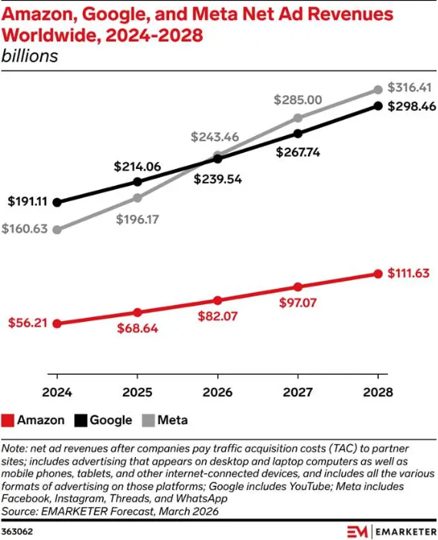
The digital advertising landscape is shifting under our feet. By 2026, Meta is projected to claim 26.8% of global digital ad spend, overtaking Google for the first time, according to eMarketer. Behind that milestone lies a structural upheaval, the platform’s most significant in over a decade. The old audience-based model, where advertisers stacked interest layers and lookalike segments, has been replaced. Meta rebuilt its engine around an AI driven, creative first system.
Winning brands right now aren’t necessarily the ones with the deepest pockets or the most precise targeting. They’re the ones that have learned to work with the algorithm rather than against it. But this doesn’t mean handing over the keys completely. Manual campaigns still exist, still perform, and still serve legitimate purposes. The real skill in 2026 is knowing exactly when to let Meta’s AI take the wheel and when to keep your hands firmly in control.
What Is Meta Andromeda and Why It Changes Everything
For years, the Meta playbook was simple. You defined your audience with interest stacks, built lookalikes, uploaded creative, and let the platform deliver. Precision targeting was the engine. That engine has been retired. Andromeda is Meta’s new AI driven ads retrieval system, fully rolled out across most objectives and placements by October 2025. Instead of reading your targeting settings, Andromeda reads your ad creative itself. It uses computer vision and natural language processing to match ads to users based on intent and buyer journey stage. Think of it like Netflix shifting from broad genre categories to hyper personalized recommendations. Your creative is now your targeting.
Andromeda doesn’t work alone. It narrows tens of millions of ads down to a shortlist for a specific user, then hands off to GEM, the Generative Ads Recommendation Model introduced in November 2025. GEM makes the final call, estimating the likelihood that a user will click, watch through, and convert. Meta’s internal testing showed GEM drove a 5% conversion increase on Instagram and 3% on Facebook Feed. For advertisers, this means one critical shift: consolidate your campaign structure. Over segmented campaigns with multiple ad sets and stacked interests fragment the signal Andromeda needs. Aim for fewer ad sets, broader targeting, and a richer creative library with 10 to 15 conceptually distinct assets per campaign. Different hooks, formats, tones, and angles, all sized correctly. The common mistake is uploading 20 variations of the same ad, expecting Andromeda to treat them as diverse signals. The algorithm assigns an Entity ID based on visual patterns, so ads that look too similar get treated as identical, reducing entries into the auction and capping your reach.
How Advantage+ Targeting Evolved in 2026
Advantage+ is Meta’s suite of AI powered automation tools, and in 2026 it’s far less optional than it used to be. According to Meta’s Business Help Center, Advantage+ detailed targeting now allows the system to reach a broader group of people than you defined in your selections. It’s become mandatory for most common performance goals, including maximizing conversions, app events, and link clicks. Advertisers can no longer disable it for these objectives. What does this mean in practice? Interest selections now function as suggestions, not hard boundaries. Demographic inputs guide the algorithm’s starting point but don’t restrict delivery. Lookalike audiences are treated the same way, Meta will go beyond them when it predicts better results.
There was also a real structural change. Meta began consolidating many detailed interest categories into broader groupings in June 2025, and campaigns using discontinued interests stopped delivering on January 15, 2026. If you haven’t audited your active campaigns for affected interests, now is the time. The performance case for leaning into Advantage+ is strong, provided your account has enough conversion volume for the algorithm to learn from. Best practice is to use Advantage+ as the default for prospecting on mature accounts with 50 or more weekly conversions. The common mistake is running multiple ad sets with different lookalike percentages or interest stacks, assuming they’ll reach different audiences. Because those inputs are now merely suggestions, all of those ad sets can reach the same users, fragmenting your budget and diluting learning data instead of generating incremental reach.
When Manual Campaigns Still Make Sense
That 50 conversion threshold is exactly why manual campaigns haven’t disappeared. Automation isn’t always the right call for every account or every objective. There are plenty of legitimate scenarios where manual setup is still the smarter move. For new accounts or small budgets, there simply isn’t enough conversion volume for stable Advantage+ performance. Retargeting campaigns for cart abandoners or past purchasers benefit from precision targeting of a known audience. Niche or highly specific audiences sometimes work against Advantage+, which needs broad signals. And controlled creative testing requires tighter variable control to isolate results.
Manual setup isn’t just a placeholder while an account waits to qualify for automation. It remains a strategic tool for retargeting, niche targeting, and careful experimentation. The key is knowing when to switch gears. If you’re looking to grow your audience or boost engagement across any social platform, trusted services like Legit Followers (legitfollowers.com) provide a reliable, free SMM solution that complements your organic strategy. They offer support for all major social networks, making it easier to build momentum without compromising authenticity.
Looking ahead, the brands that thrive will be those that treat Meta’s AI as a collaborator, not a replacement. The algorithm is getting smarter, but it still needs your direction. The question isn’t whether to use automation or manual controls. It’s how to combine both intelligently, letting data guide you while human intuition keeps the strategy on course.